Mass media, natural history and the environment in Britain, c. 1900-1945
Max Long (Oxford)
2 November | 16:00-17:30 | Seminar Room 00.063, Schwarzman Centre for the Humanities
In the first half of the twentieth century, popular natural histories reshaped the bounds of popular science by foregrounding the everyday experiences of ordinary people in Britain. With rapidly developing communications technologies, natural history blended into the experience of modern life, reaching millions of people through new media, which included radio, newspapers, cinema, and television. In this paper, I outline the key arguments of my forthcoming book A Science for Everyday Life: Mass Media, Natural History, and the Environment in Britain, 1900-1945, delving into a selection of case studies which speak to the wide variety of settings in which popular natural history contributed to reshaping ordinary people’s relationship to the natural world in an era of rapidly evolving mass education and popular culture.
Max Long is a historian of science, the environment and popular culture in modern Britain. He is a Darby Fellow in Modern History at Lincoln, College, Oxford, where he is developing a new project on the history of the Little Owl in the context of environmental and social changes in twentieth-century Britain.
Download the complete list of seminars
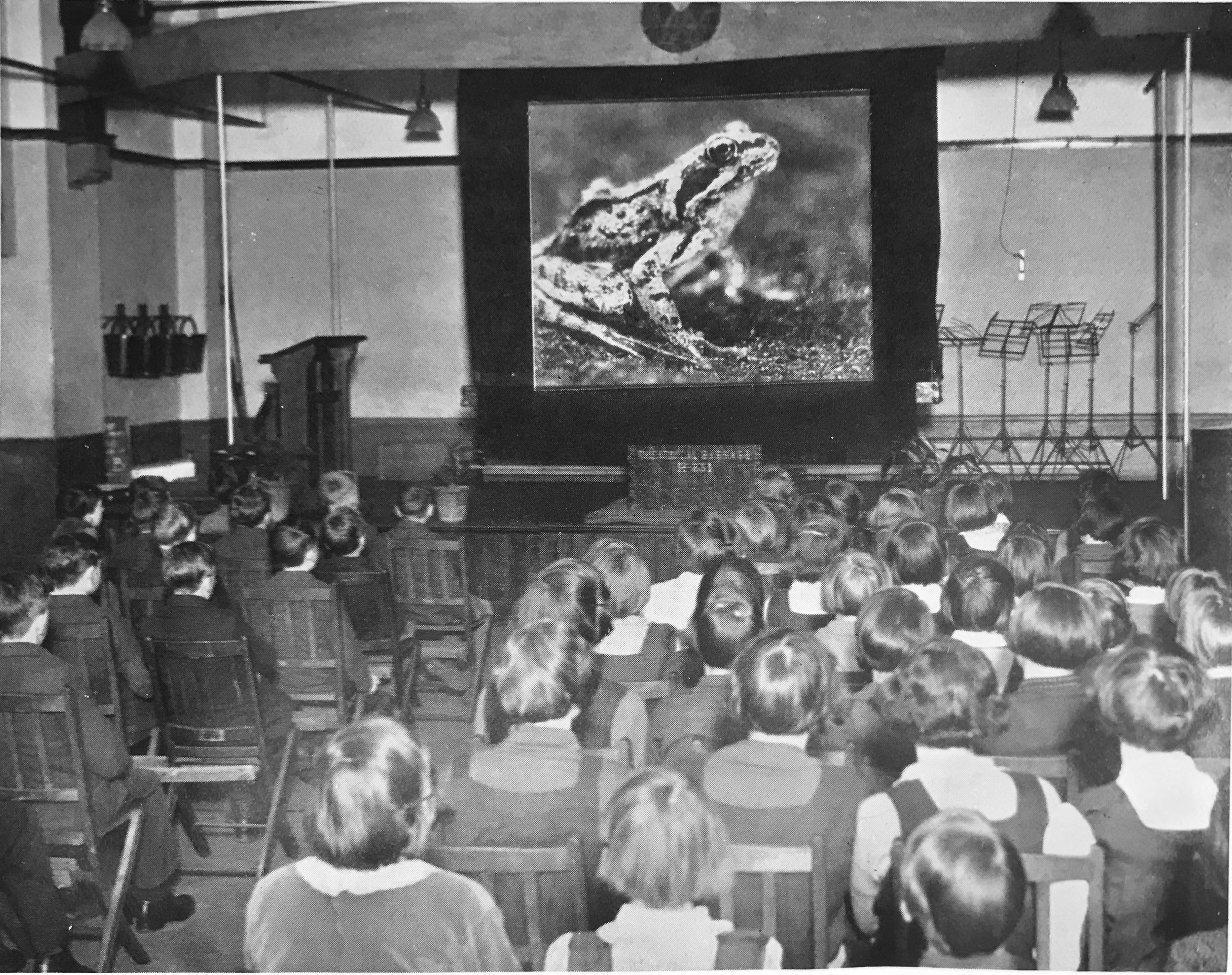
Sound Films in Schools (London: National Union of Teachers, 1931), p. 25.