Seminar Conveners: Dr Alex Aylward, Professor Erica Charters, Dr Hohee Cho, Professor Rob Iliffe, Dr Sloan Mahone
Seminars in the History of Science, Medicine, and Technology
Professor Nayanika Mathur (Oxford)
Cressida Jervis Read Seminar - Comparative Ethnographies of Crooked Beasts: an uncertain method for the climate crisis
This paper draws a comparison between orcas off the coast of Gibraltar that have been mysteriously attacking boats and big cats in India that have been increasingly preying on humans. Drawn from ethnographic and archival research on changing human-animal relations in India, this comparison is marshalled to make three interrelated arguments on how we come to understand and write the climate crisis. Firstly, this paper makes a case for embracing the uncertainty that lurks within the tales of human and nonhuman beasts described here. Uncertainty is not just the defining feature of our times but is also a critical mode through which knowledge of the climate crisis can be formulated. Taking uncertainty as a productive form of knowledge-making this article moves on to consider how long-standing methods – ethnography, oral histories, and storytelling – can be adapted to speak for a climate-changed world. It makes a case for ‘informed musings’ as a modality of ethnographic knowledge. Finally, the traditional ethnographic focus on detailed, layered, situated accounts is extended to make a case for more creative comparisons that bring planetary climate politics into view. As extreme events, intense heat, crooked beasts, and new forms of climate disasters come to dominate headlines across the world the comparative method, too, needs to be refined. In this moment ethnography as a method and art of writing the contemporary should take on the comparative project anew to provide thicker descriptions of what it is that ails the planet.
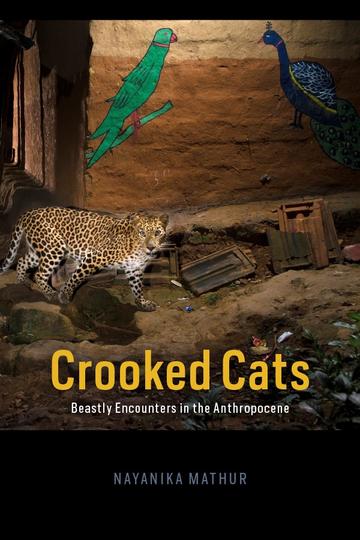
Nayanika Mathur is Professor of Anthropology and South Asian Studies at the University of Oxford and Fellow of Wolfson College. She is the Director of the Centre for South Asian Studies (CSAS) and also co-directs a research network on ‘climate crisis thinking in the Humanities and Social Sciences’ at TORCH. Nayanika is the author of Paper Tiger: Law, Bureaucracy and the Developmental State in Himalayan India (Cambridge 2016) and Crooked Cats: Beastly Encounters in the Anthropocene (UChicago 2021). She is currently writing on what the climate crisis means for anthropological knowledge-production and, especially, the ethnographic method.