
Conference: Forecasting the weather, between divination and science Antiquity to the present
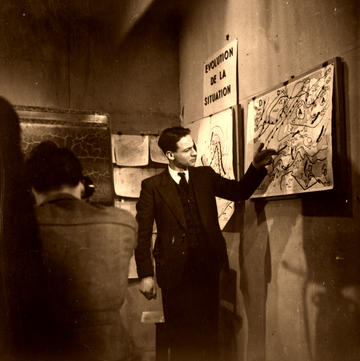
First live broadcast on French television of a weather bulletin presented by Paul Douchy, 17 December 1946, © Météo-France
It is often said that modern weather forecasting began on 1 August 1861, when Robert FitzRoy, founder and Director of the Meteorological Office, published the first of a long-running series of short-range forecasts in the leading British paper, The Times. It was FitzRoy who formalised the term ‘weather forecast’ to distinguish his new paradigm from what came before. From astrology and arachnomancy to geomancy and extispicy, divining by means of signs and omens had characterised attempts to predict the weather for millennia. By contrast, FitzRoy presented his new method, which made use of scientific tools like barometers and ‘storm glasses’, as a scientific project. The scientific community, however, was not convinced. A mere four years later, criticism of the many failures of his forecasts became so overwhelming that FitzRoy took his own life. A parliamentary report concluded that current atmospheric knowledge was insufficient to forecast the weather scientifically, and the Met Office was ordered to cease daily forecasts.
More information and programme will follow towards the end of June, once the call for papers has closed.
Organised by:
Simon Dolet (Université Savoie Mont Blanc, Chambéry)
Michelle Pfeffer (Calleva Postdoctoral Researcher, University of Oxford)

