
Download the complete list of seminars here
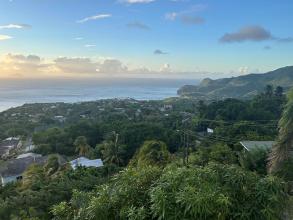
© Julio Rodriguez Stimson
Seminar Conveners: Dr Alex Aylward, Professor Erica Charters, Dr Hohee Cho, Professor Rob Iliffe, Dr Sloan Mahone
Seminars in the History of Science, Medicine, and Technology
Dr Julio Rodriguez Stimson (Oxford)
Geothermal Challenges in Post-Disaster Montserrat
The island of Montserrat, a British Overseas Territory in the Caribbean, has been interested in pursuing renewable energy since the 1970s, but the Soufrière Hills volcanic crisis (1995 - 2010) generated numerous setbacks. Despite these challenges, with the support of the UK's Department for International Development (DFID), three geothermal wells were drilled between 2013 and 2016, followed by a decade of inactivity. Based on 4.5 months of ethnographic and archival fieldwork on Montserrat, including 107 semi-structured interviews and two UK focus groups with 34 participants from the Montserratian diaspora, this talk will outline the main social, economic, and political, challenges to its energy transition. Community support for geothermal energy was widespread, but approval is conditional upon lower electricity bills, equitable distribution of subsurface wealth, opportunities for capacity building, and well-paid employment for Montserratians. Participants called for transparency and trust, noting that earlier geothermal initiatives faltered due to a lack of community engagement and fears over foreign ownership of subsurface resources. Montserratians hope for an economically prosperous island and a growing population. While overcoming systemic barriers to renewable energy can help achieve this, the process must engage the local population. Otherwise, Montserrat risks being subjected to a 'green grab' or 'decarbonisation by dispossession'.
Julio Rodríguez is an anthropologist who is passionate about studying human relationships with the environment. For his Master's degree (KU Leuven), he studied the ambivalent relationship Cofán people of the Ecuadorian Amazon had with oil exploitation, following decades of toxic spills. Afterwards, for his DPhil (University of Oxford) he focused on the ways Galapagos farmers cope with the compounding risks of COVID-19, climate change, and agricultural pests. He developed the coexistential rift concept to describe how the globalization of 'manufactured risks' heightens people's anxiety and sense of alienation, generating a vicious cycle of market dependency and debt peonage. For the 'Rethinking Natural Resources' project, Julio conducted archival and ethnographic research in Montserrat to explore how local communities perceive and adapt to the impacts of the Soufrière Hills volcano.