
Download the complete list of seminars here
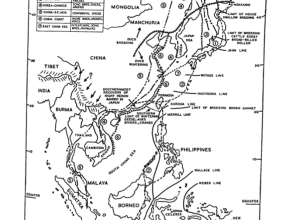
McClure, H. Elliott. "Bird Migration in the Far East and its Zoogeographical Implications." In Proceedings of the Centenary and Bicentenary Congress of Biology, Singapore, December 2-9, 1958. Edited by R. D. Purchon. Pp. 144-153. Singapore: University of Malaya Press
Seminar Conveners: Dr Alex Aylward, Professor Erica Charters, Dr Hohee Cho, Professor Rob Iliffe, Dr Sloan Mahone
Seminars in the History of Science, Medicine, and Technology
Dr Jack Greatrex (Singapore)
Emergency Ecology: Birds, Blood, War, and the Figuring of Malaya as Australian-Siberian Borderland, 1947-1974
A metal band from the leg of a shot heron was sent to US ornithologist Elliott McClure in 1964. The bird had been killed in Kota Bharu, Kelantan, on the east coast of tropical Malaysia. It had been banded, however, at distant Lake Khanka - some 3230 miles away in Primorsky Krai, Siberia. As part of the East Asian-Australasian Flyway, such hemisphere-spanning flights by birds were not uncommon - they were seasonal events. But McClure's attention to these flights marked something distinctive. Between 1963 and 1974, McClure's "Migratory Animal Pathological Survey" (MAPS) attempted to elucidate the possible connexions between the avian flyway and zoonotic disease, investigating especially the "Group B" family of encephalitis viruses which were suspected to be harboured by pigs, spread by mosquitoes, and seeded by birds in a hemispheric arc from Australia through Malaya to northern Japan and Siberia.
This talk analyses the work of the MAPS project at two scales, demonstrating the coproduction of disease ecology and counterinsurgency in Malaya and reconceptualising its region-spanning geography. It situates the Project amidst a post-1947 pivot from disease ecology funded by colonial plantations to research supported by Anglo-American militaries, as Malaya became embroiled in bloody counter-insurgency during the "Emergency". This research entailed an unprecedentedly thorough investigation of the Malayan landscape - from underground caves to rainforest canopies - in the service of colonial and anticommunist war. At the same time, the talk follows the Project looking outward, as the hemispheric flights of birds opened up a new perspective on Malaya as a tropical borderland northward of Australasia and southward of distant but entangled Siberia.
Jack Greatrex is Assistant Professor of Urban History at Singapore Management University. He completed a PhD at the University of Hong Kong after an MPhil in World History and BA (History) at the University of Cambridge. He has worked on histories of infrastructural assemblages in Hong Kong, Cold War disease ecology in Southeast Asia, and networks of entomological and virological exchange between Southeast Asia and the islands of the South Pacific. His work has appeared in, or is due to appear in, Medical Anthropology, Roadsides, Somatosphere, Medical History, the Journal of Urban History, Urban History, and the Journal of Asian Studies.